
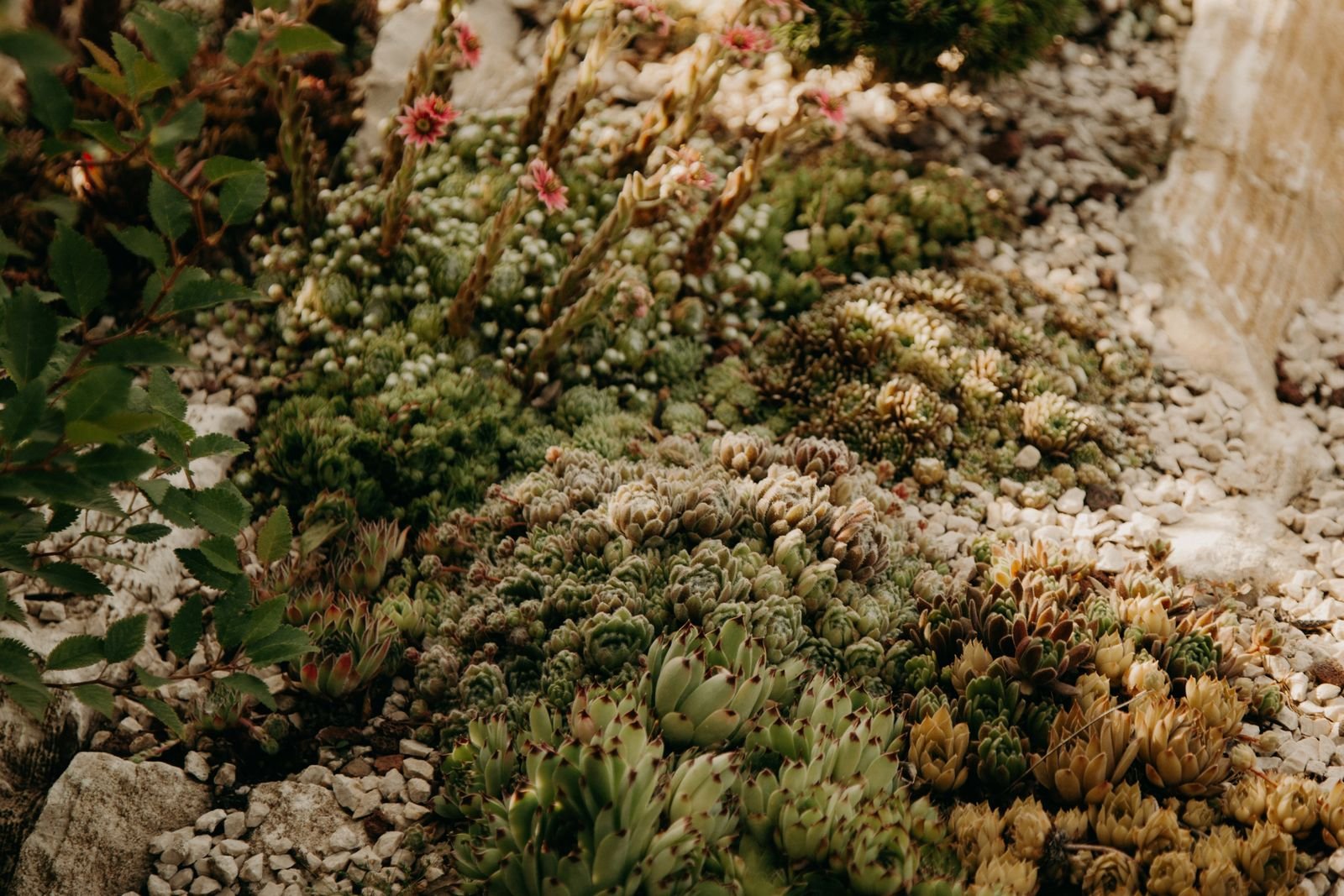
Xeriscaping gets a bad reputation as “gravel and cactus.” Done well, it's the opposite — a layered, textured landscape that just happens to need a fraction of the water a traditional lawn-and-annuals yard requires. For clients in drought-prone regions of the Southwest, Mountain West and increasingly the Southeast, it's one of the highest-value design conversations we have.
Start with grouping, not plant selection
The biggest xeriscaping mistake is picking drought-tolerant plants and scattering them around a yard that's still irrigated like a traditional lawn. The actual water savings comes from hydrozoning — grouping plants with similar water needs into the same irrigation zone, so you're not overwatering low-need plants to keep high-need ones alive nearby.
Keep a “high-water” zone near the house
Most successful xeriscape designs keep a smaller, more water-intensive planting zone close to entryways and patios — where you'll actually see and touch it daily — and let water needs taper off toward the property edges. This keeps the design from feeling austere while still cutting overall water use by 50% or more.
Use mulch and hardscape as design tools, not filler
Decomposed granite, river rock and permeable pavers aren't just water-saving ground cover — they're texture and color choices that frame plantings the same way lawn does in a traditional yard. A 2-3 inch mulch layer around planting beds also cuts evaporation dramatically and suppresses weeds, reducing maintenance alongside water use.
Plant choices that carry a xeriscape design
- Ornamental grasses — low water, high movement and texture, work in nearly every US climate zone
- Native perennials — already adapted to your regional rainfall patterns
- Succulents and agave — strong architectural statements for hot, arid regions
- Drought-tolerant shrubs — provide the structural backbone traditional foundation planting used to
Pair the design with drip irrigation
Even drought-tolerant plants need consistent water while establishing. A properly zoned drip irrigation system delivers water directly to root zones with far less evaporation loss than overhead spray, which is why nearly every xeriscape project we design includes a drip retrofit.
Thinking about converting part of your yard to a lower-water design? Our garden and planting design team can put together a hydrozoned plan matched to your climate and HOA guidelines where applicable.